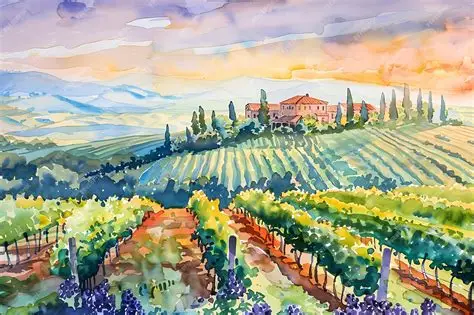
The Mass readings for Sunday, October 4, 2026 draw us into a powerful, personal theme: we are stewards of God’s Vineyard, entrusted with gifts meant to bear fruit in our world. Isaiah, Paul, and Matthew each approach this truth from different angles, that together form a unified call to responsibility, gratitude, and spiritual maturity.
In Isaiah 5:1–7, the prophet sings a love song about God’s Vineyard, an image of Israel, but also of every human heart. God has done everything possible to help His people flourish: He cleared the land, planted choice vines, protected them, and waited for a harvest of justice and compassion. Instead, He found “wild grapes”—self‑interest, injustice, and indifference. Isaiah’s message is one of heartbreak. God longs for His people to live in a way that reflects His love.
This image of God’s Vineyard is timeless. Today, each of us is given soil to cultivate: our families, our work, our parish, our friendships, our inner life. The question Isaiah poses is simple and direct: What kind of fruit am I producing? Do my words and actions bring healing, fairness, patience, and kindness into the world? Or do I slip into negativity, resentment, or self‑protection? Isaiah reminds us that God’s gifts are never meant to be hoarded — they are meant to bless others.
St. Paul, in Philippians 4:6–9, offers what’s needed to cultivate the Vineyard well. He urges us to reject anxiety and instead turn everything over to God in prayer. When we do, “the peace of God that surpasses all understanding” guards our hearts. Paul then gives us a practical roadmap: focus on what is true, honorable, just, pure, and gracious. In other words, tend the Vineyard of your mind. What we dwell on shapes the fruit our lives produce.
Paul’s words speak directly to modern life. We live in a world saturated with noise, fear, and distraction. It is easy to become overwhelmed or cynical. But Paul invites us to choose a different path; one rooted in gratitude, clarity, and trust. When we cultivate inner peace, we become people who bring peace to others.
Finally, in Matthew 21:33–43, Jesus expands Isaiah’s Vineyard image into a parable. The landowner entrusts his Vineyard to tenants, but when he sends servants, and finally his son, to collect the harvest, they reject them all. The message is unmistakable: God entrusts His Kingdom to us, but He expects us to respond with faithfulness, humility, and openness. Rejecting His invitations leads to spiritual barrenness; embracing them leads to abundance.
This Gospel challenges us to examine how we respond to God’s presence in daily life. Do we welcome His guidance, or resist it? Do we listen when He speaks through Scripture, conscience, or the needs of others? The Vineyard will bear fruit, but only if we cooperate with the One who planted it.
Together, these readings remind us that God’s Vineyard is not an abstract idea. It is the real, ordinary, everyday life we live. When we cultivate it with prayer, justice, compassion, and integrity, we become people who reflect God’s love in a world that desperately needs it.
Living God’s Vineyard in a Modern World
In today’s fast‑moving culture, it’s easy to forget that God’s Vineyard includes the ordinary spaces where we spend most of our time—our homes, workplaces, and communities. These readings remind us that spiritual fruit grows through small, consistent acts of honesty, compassion, and prayer. When we choose patience over frustration, generosity over convenience, or forgiveness over resentment, we cultivate God’s Vineyard in ways that quietly transform the world around us. The Vineyard flourishes when we allow God to shape our decisions, our habits, and our relationships.
For more on living faith in daily life, see my reflection on Encountering the Presence of God.
The Canadian Conference of Catholic Bishops offers helpful resources for deepening our understanding of Scripture.
Canadian Conference of Catholic Bishops (CCCB) – https://www.cccb.ca
Leave a Reply